Man Ray and Steichen: Two Influences That Changed How I Think About Light
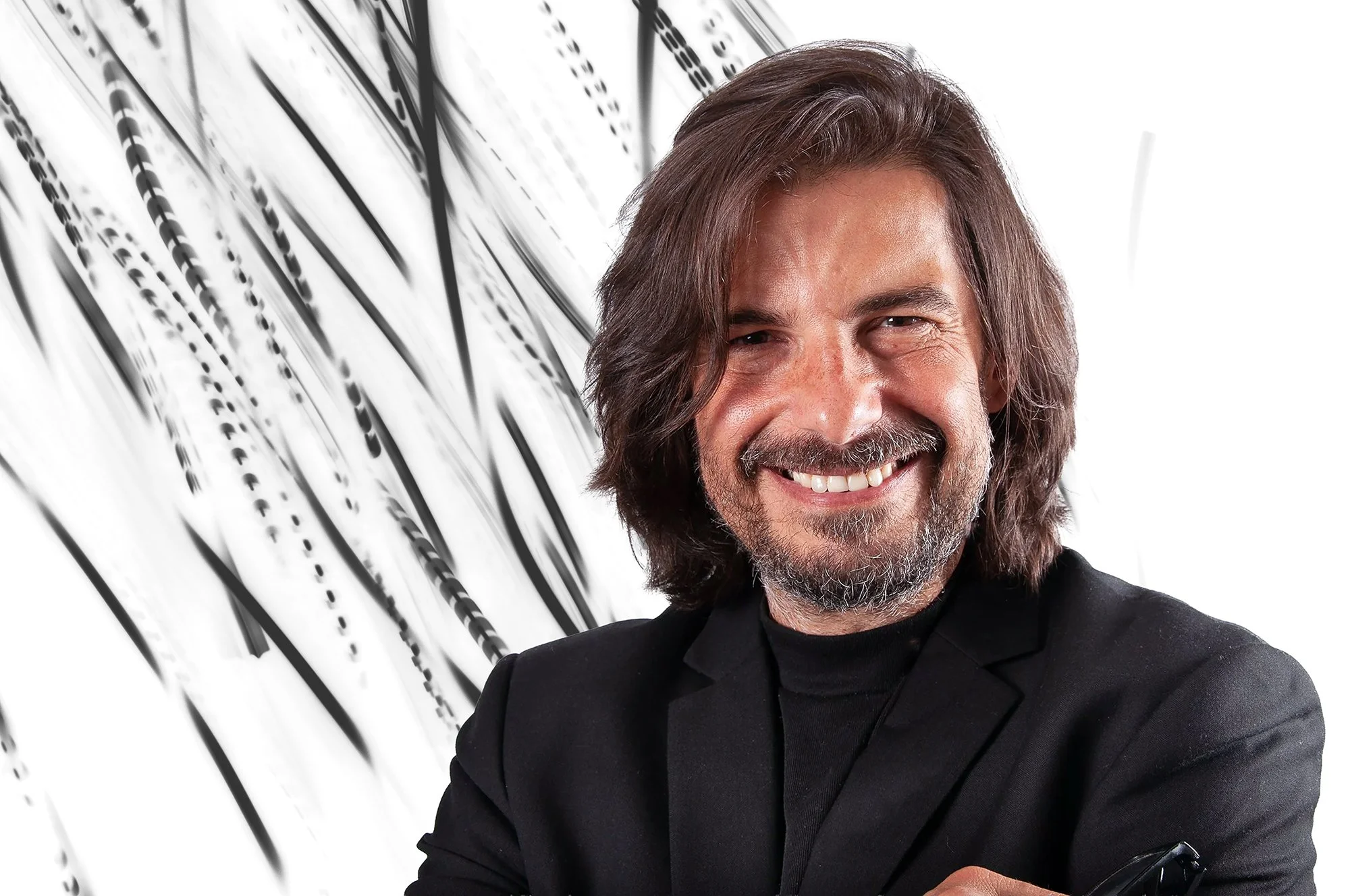
Man Ray and Steichen are among the declared influences on Jose Penm's experimental photography. Man Ray's contribution was the permission of the camera-less image: proof that photography does not require a camera to be serious, and that light acting directly on photosensitive material produces images with their own authority. Steichen's contribution was different: a way of transforming the ordinary through light and scale until the familiar became something else. Both artists showed that experimental photography is not about technique but about proposing a different relationship between the medium and the world.
Influences matter only when they change the work. Man Ray and Eduard Steichen changed mine — not by providing images to echo, but by proposing ways of seeing that altered the grammar of what I was willing to attempt. Both photographers are mentioned in my own artist statement not as ornament but as genuine formation.
This essay is about what each of them actually contributed, and how that contribution became invisible inside the current work.
Why influence matters only when it changes the work
The interesting thing about a serious influence is that it eventually disappears. Not in the sense of being rejected or replaced, but in the sense of being absorbed so completely that it becomes part of the grammar rather than a visible reference. The moment you can point to an influence clearly and trace it directly to a specific image, the digestion is incomplete. The influence is still on the surface.
When the influence has done its real work, you feel it only in the kind of problems you choose to pursue and the standard you hold them to. The longer arc of that formation — from Caracas to Eindhoven, through design, film, and darkroom — is something I have written about separately.
Man Ray and the permission of the camera-less image
Man Ray's rayographs did something specific that I find essential: they removed the camera from the chain of image-making. Objects were placed on photosensitive paper, light was applied, and the result was an image that owed nothing to lens, viewfinder, or the usual grammar of photography.
For me, this matters not because I work primarily without a camera, but because it changed my sense of what photography is permitted to be. If the medium can operate without its most characteristic tool and still produce images with force, then the question of what photography actually is becomes genuinely open.
That opening is where serious experimental photography lives.
Steichen and the transformation of the ordinary through light
Steichen's contribution is different in quality but equally important. His attention to how light transforms the ordinary — how an apple, a boulder, a mountain slope can become something else under the right conditions of observation and reduction — proposed a different kind of discipline.
The ordinary is not the enemy of serious photography. The ordinary is the material. What changes is what you do with light, scale, and the patience to look past the first naming of the thing.
This is part of what I carry. Not the subject, not the style, but the willingness to let light and reduction transform the object into a different kind of visual event.
What both photographers share — and what it means for my work
What Man Ray and Steichen share is not a single style or a common technique. They share an insistence that photography does not have to obey its first grammar. Man Ray removes the camera. Steichen removes the assumption that the subject determines the image. Both are making the same essential claim: that the medium has more freedom than its conventions suggest, and that using that freedom seriously is the real work.
In my work, that shared insistence expresses itself through reduction, through the flat field, through measured light and extended exposure. That relationship between light and the flat field — how light becomes the subject rather than the condition — is something I work with directly.
How these influences become invisible inside the current work
The way to know whether an influence has done its real work is to look for it and find it hard to locate. I do not make rayographs. I do not make images that look like Steichen's. What I do is work with the question that both photographers opened: what can photography be when it refuses its most convenient grammar?
That question has no single answer. Every serious body of work gives it a different one. The influence is in the question, not the answer. And it is inside the current practice in exactly the way it should be: invisible but active.
FAQs
Q: Is abstract fine art photography a legitimate collecting category?
A: Yes. Institutions including MoMA, the Getty, Tate, and Aperture have built sustained arguments for abstraction as central to the photographic medium. The collecting precedent is well established.
Q: Why did it take time for abstract photography to gain collecting legitimacy?
A: Photography as a whole took time to gain serious collecting status. Once it did, abstraction — which had always been part of the medium's deepest capacities — gained recognition as a central rather than peripheral practice.
Q: What is the Edge of Vision?
A: Aperture Foundation's major publication documenting the rise of abstraction in photography. It argues that abstraction is intrinsic to the medium rather than a departure from it — one of the field-defining arguments for serious abstract photography collecting.
Q: How should a collector approach abstract fine art photography?
A: As a tradition with intellectual depth, institutional endorsement, and clear historical precedent. The question is not whether it is legitimate but which artists within the tradition are doing the most serious work.